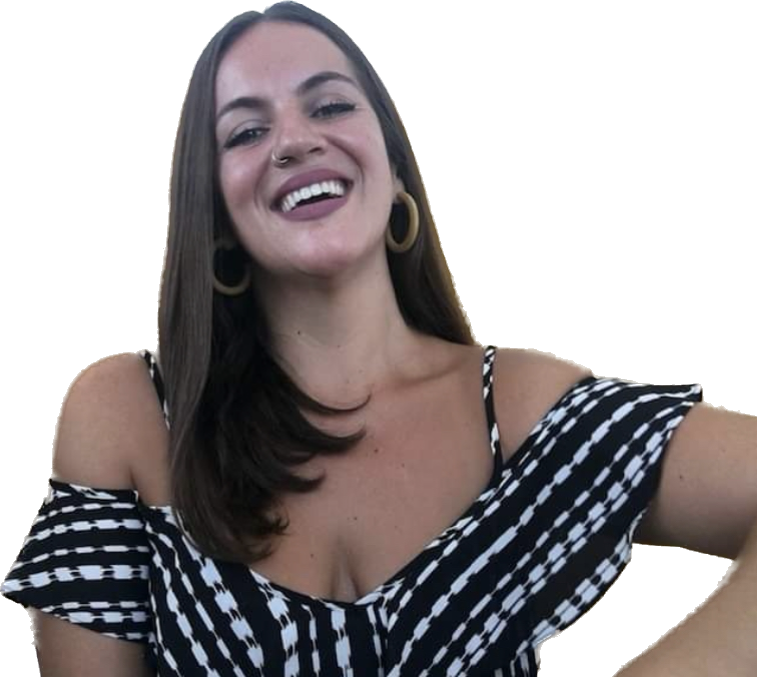
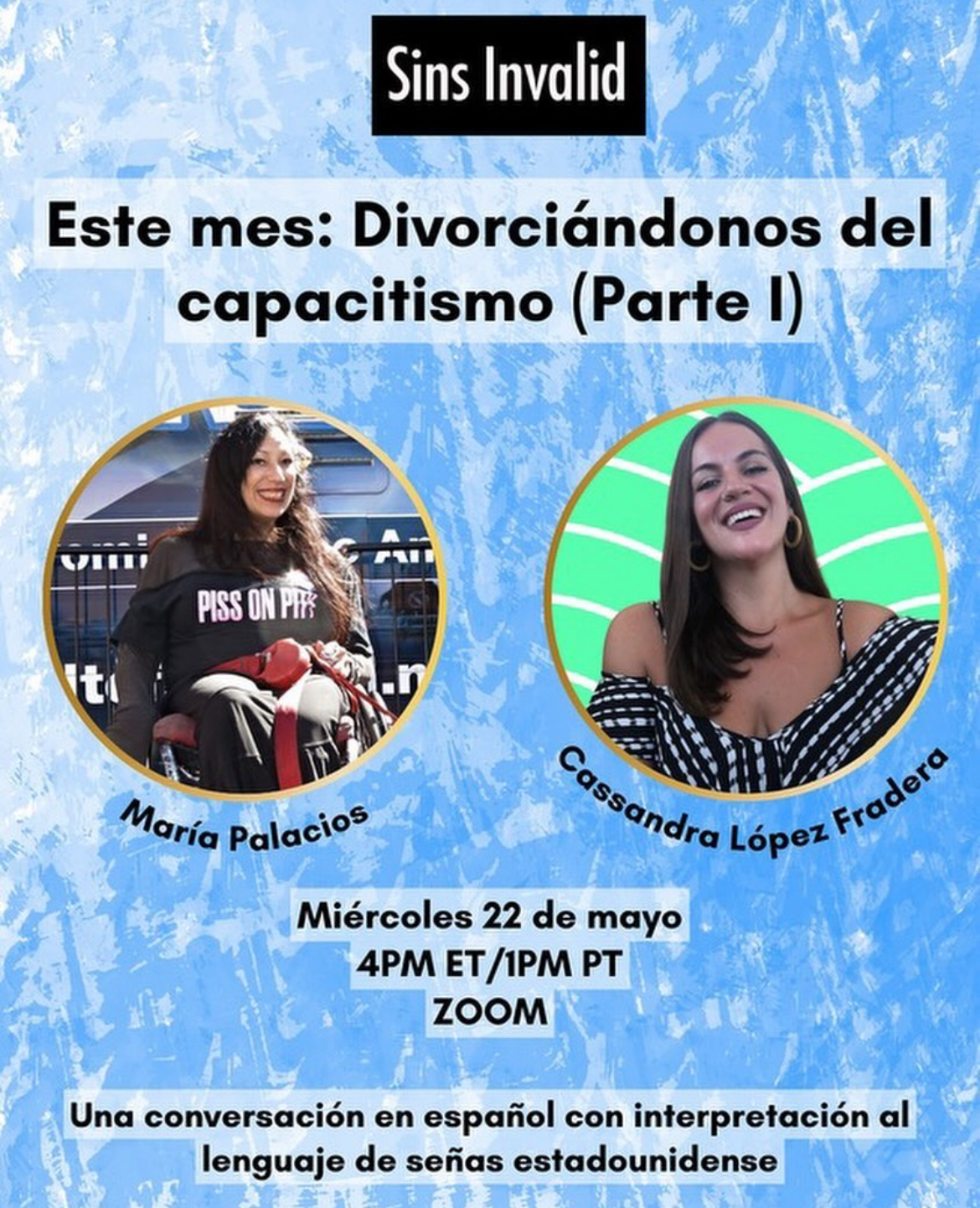
Divorciándonos del capacitismo (Parte I)
Una conversación en español con interpretación al lenguaje de señas estadounidense. Acompáñenos en la primera parte de tres jugosas y provocativas conversaciones sobre el capacitismo y las varias ramificaciones culturales que contribuyen a cimentar relaciones tóxicas con nuestros cuerpos y con el mundo que nos rodea.
Comenzando con el lenguaje capacitista que domina nuestra cultura, María Palacios y Cassandra López Fradera abren la conversación sobre el peso y opresión que descargan ciertas palabras aún cuando son palabras comunes y corrientes en nuestro lenguaje. El trauma que el capacitismo causa en las vidas de las personas disca es constantemente activado por la manera en que muchas palabras son usadas hacia nosotres. Únase a nosotres para una charla digital mientras exploramos estos temas y creamos nueva narrativa con nuestra verdad colectiva.
10 Principles of Disability Justice
*Source: Sins Invalid
INTERSECTIONALITY “We do not live single issue lives” –Audre Lorde. Ableism, coupled with white supremacy, supported by capitalism, underscored by heteropatriarchy, has rendered the vast majority of the world “invalid.”
LEADERSHIP OF THOSE MOST IMPACTED “We are led by those who most know these systems.” –Aurora Levins Morales
ANTI-CAPITALIST POLITIC In an economy that sees land and humans as components of profit, we are anti-capitalist by the nature of having non-conforming body/minds.
COMMITMENT TO CROSS-MOVEMENT ORGANIZING Shifting how social justice movements understand disability and contextualize ableism, disability justice lends itself to politics of alliance.
RECOGNIZING WHOLENESS People have inherent worth outside of commodity relations and capitalist notions of productivity. Each person is full of history and life experience.
SUSTAINABILITY We pace ourselves, individually and collectively, to be sustained long term. Our embodied experiences guide us toward ongoing justice and liberation.
COMMITMENT TO CROSS-DISABILITY SOLIDARITY We honor the insights and participation of all of our community members, knowing that isolation undermines collective liberation.
INTERDEPENDENCE We meet each others’ needs as we build toward liberation, knowing that state solutions inevitably extend into further control over lives.
COLLECTIVE ACCESS As brown, black and queer-bodied disabled people we bring flexibility and creative nuance that go beyond able-bodied/minded normativity, to be in community with each other.
COLLECTIVE LIBERATION No body or mind can be left behind – only moving together can we accomplish the revolution we require.
 crafting connection through story, sea & design
Leave a comment